
6 Million Euro Patek vs 30 Euro Casio
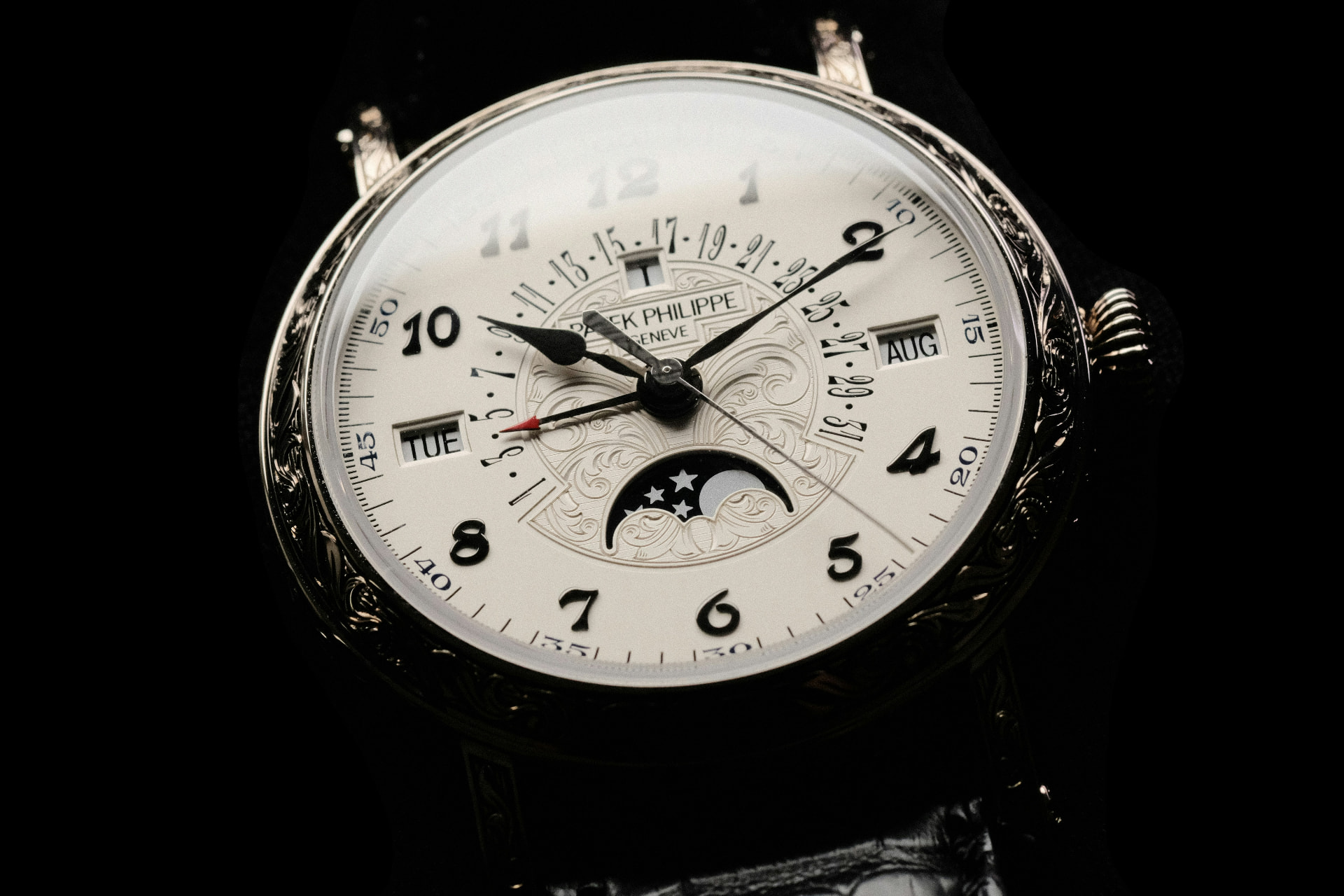
If you just wish to tell the time as accurately as possible, you're better off buying a 30 euro Casio. It will lose maybe a few seconds a month. So why do people spend thousands, sometimes millions, on luxury timepieces that are worse at their stated job?
People who ask this question are only considering basic utilitarian needs, not the psychological needs that emerge once those needs are already met. This is really just Maslow's hierarchy playing out on the wrist. Once survival, safety, and function are no longer in question, humans start optimizing for esteem, belonging, and identity instead. In 2026, the time is a glance away on your smartphone screen, so watches as timekeeping tools are largely redundant. What watches actually do today is signal status. This is partly because they're one of the few universally acceptable accessories for men, akin to handbags like Birkins and Goyard totes for women. A well chosen watch says something about taste and access, without a single word being spoken.
This wasn't always the case. For most of the twentieth century, a watch's value came from its precision and reliability and Swiss manufacturers dominated because they made the best ones. That changed on Christmas Day 1969, when Seiko quietly released a gold quartz wristwatch in a Tokyo department store. The technology inside it was the real shot across the bow. Within a few years, quartz movements could be mass produced for pennies and kept better time than the finest Swiss mechanical calibers ever had. The industry now calls what followed the Quartz Crisis, a period so severe that entire towns in the Jura Arc saw their factories close, and storied brands that had operated since the eighteenth century simply disappeared. The question it posed was almost philosophical. If a quartz watch keeps better time, costs less, and never needs servicing, what is a mechanical watch even for? For most of the 1970s, nobody in Switzerland had a good answer.
The answer came from a farmhouse in the Vallée de Joux. Jean Claude Biver had trained under Audemars Piguet and worked at Omega, and he had a genuine nostalgia for the valley where watchmaking as an art form had been born. In 1982, with his friend Jacques Piguet, he bought the rights to Blancpain, a brand so thoroughly abandoned it had no employees, no inventory, and no cash left in it. Instead of trying to out-engineer quartz, Biver leaned into everything quartz could never offer. Blancpain's new promise was blunt. Since 1735, there had never been a quartz Blancpain watch, and there never would be. What had been a liability became a virtue. Complications like tourbillons and perpetual calendars stopped being outdated engineering and became artisanal achievements, hand-finished proof of human skill in a world quietly filling up with electronics. Biver called it a living museum of the past, and the bet paid off. Within a decade, a company worth almost nothing was one of the most respected names in fine watchmaking again.
This repositioning did not happen in isolation. As the Swatch Group formed and began acquiring heritage watchmakers, Blancpain included, the strategy scaled far beyond one farmhouse brand. Mechanical watches, once framed as tools competing on accuracy, were now framed as objects of craftsmanship competing on story and scarcity. Once that reframing took hold, something counterintuitive happened. Prices did not need to come down to survive. They went up and demand followed. Economists call this the Veblen effect, where the desirability of goods increases because they are expensive rather than despite it. The high price stops being a barrier and becomes part of the appeal, a signal of status a cheaper alternative could never send.
Owning a mechanical watch today, with all its inefficiency compared to a smartphone, is precisely the point. The inefficiency is the value.
Today, watches don't just tell you the time. They tell others what your time is worth.
Sources