
In Pizza We Trust
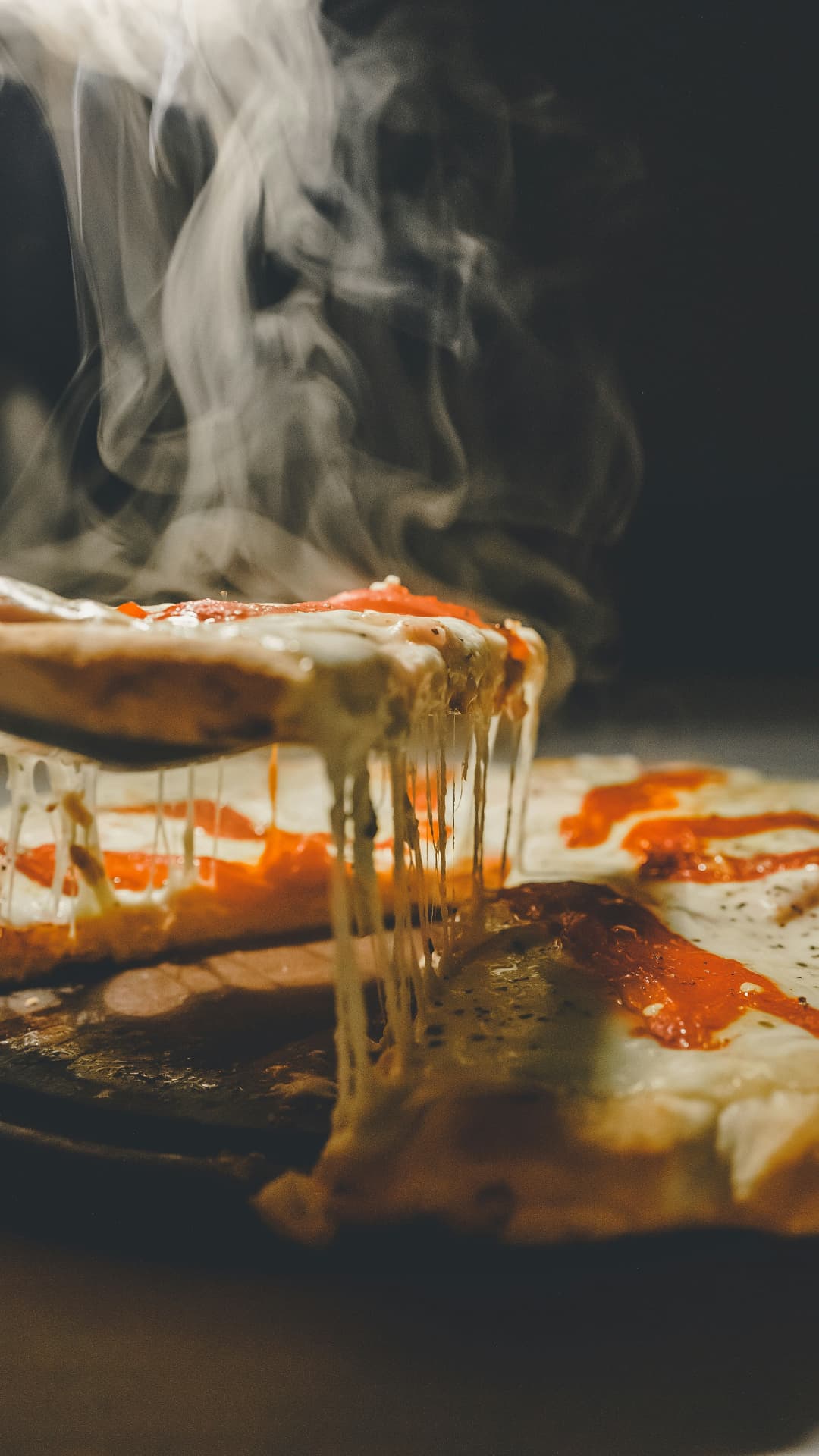
Whenever people ask me what my favourite food is, I struggle to answer. It depends on the week I've had, on my mood, on how hungry I am or sometimes even on the weather. One day I'll tell you it's a perfectly spiced Indian curry, the next I'll insist it's sushi. Give me a rainy Sunday and I might suddenly decide pasta is the greatest invention mankind has ever produced.
I don't really have a favourite food. I suppose that's one of the banes of being a foodie, there is just too much good food in the world.
And the more I travel, the more I realise food is so much more than something we eat. There is nuance, technique and generational knowledge baked into almost everything we put on our plates. Recipes are passed down, tweaked, guarded, reinvented and occasionally completely butchered by the next generation. Somehow, that is part of the fun.
Food can unite us but it can also divide us spectacularly. Ask the Greeks and Turks who invented baklava and prepare to watch a perfectly pleasant dinner descend into an international incident, one neither side is backing down from anytime soon.
For me, food has even become a way of keeping people alive. Grandparents, relatives, people who have moved on, moved away, or simply aren't here anymore. Sometimes a recipe is the closest thing we have to a time machine.
So I started wondering: if food can be so personal, is there one food that can actually bring us all together? Something that transcends borders, religions, cultures and wildly different ideas of what constitutes a good meal.
And then it hit me. Pizza.
I don't think I can trust a person who doesn't like pizza. There, I said it.
It might be one of the most controversial opinions I've ever had, but I'm willing to stand by it. Because pizza has achieved something most foods haven't, it has travelled the world without losing its identity. Better yet, it has travelled the world and let everyone else mess with it. And I mean that as the highest possible compliment.
The world's greatest cultural chameleon
Pizza may have Italian roots, but it certainly doesn't belong exclusively to Italy anymore.
Take it to India and you might find paneer, tandoori chicken, spicy peppers or distinctly Indian spice blends on top of the dough. In parts of the Middle East, you'll find pizzas topped with kebab meat, shawarma-inspired flavours and regional spices. In Japan, it's been adapted in ways that might make an Italian nonna clutch her pearls.
And that's the thing I love about pizza. Nobody simply copied it, they adopted, adapted and made it theirs.
Something that started as a relatively simple combination of dough, tomato and cheese became a canvas for local culture. This is what happens when food travels, it doesn't stay still, it absorbs the flavours of the places it visits and the people who make it. Sometimes the result is traditional, and other times it's completely ridiculous. And sometimes it's pineapple on pizza, which is apparently where civilisation draws the line. Although, honestly, I'm Switzerland on this one.
Pizza doesn't ask where you're from
Maybe that's why pizza feels so universal. You can be in New York, Naples, Mumbai, Dubai, Tokyo or Zurich and order a pizza. It might look completely different. The crust might be thin or thick, crispy or chewy. The sauce might be rich and tomato-heavy or barely there. It might be covered in mozzarella, peperoni, paneer, kebab meat, seafood, vegetables or something that would probably get you excommunicated from Naples.
But you still recognize it. It's pizza.
And maybe that's the secret, pizza gives us just enough familiarity to feel comfortable and just enough flexibility to make it our own. There is something deeply human about that. We do the same thing with almost everything we encounter, taking something from somewhere else and adapting to our own tastes and circumstances. Food just happens to make that process delicious.
Apparently, I'm not the only one
So I went down the rabbit hole to see whether my pizza theory had any basis in reality.
It turns out it does.
An Oxfam survey of 16,000 people across 17 countries found pizza was the fourth most popular food in the world, with 5% of people naming it as their favourite. It even made the top three in countries as different as Germany, Guatemala, the Netherlands and South Africa.
And a few years later, a YouGov survey of more than 25,000 people across 24 countries found Italian cuisine to be the world's most-liked cuisine.
Okay. I'll take it.
Maybe pizza really is the closest thing we have to a global food language. Or maybe I'm just looking for statistical justification to eat more pizza.
What I find more interesting than pizza's popularity is why it's travelled so well. Perhaps it's because pizza is inherently democratic. It can be cheap or expensive, a late-night takeaway or a carefully crafted Neapolitan masterpiece, a frozen emergency dinner or the centrepiece of a Friday night with friends. You can eat it standing up, at a restaurant with a wine pairing, or cold from the fridge at 9am and call it breakfast. No judgement. Pizza doesn't really care.
Maybe food doesn't unite us by staying the same
We often talk about food as a way of preserving culture. It absolutely is. But maybe food can also preserve culture by changing.
People migrate and bring their ingredients, recipes and memories with them, and the food changes along the way. Sometimes that change is resisted, sometimes it becomes controversial, and people spend an extraordinary amount of time arguing about what's authentic.
But maybe authenticity isn't always the point. Maybe the more interesting question is what people did with it once it became theirs.
Pizza didn't conquer the world by insisting everyone eat it the Italian way. It conquered the world by being willing to become something slightly different everywhere it went. And perhaps that's why I keep coming back to it. Because food doesn't have to look the same to bring us together, it doesn't have to taste the same, it doesn't even have to be made the same way. Sometimes all it needs is a little dough, a little imagination and a willingness to let someone else put their own story on top.
And if that's not a metaphor for how cultures work, I don't know what is. So, do I have a favourite food? Still no.
But if you ask me what food I'd trust to unite a room full of strangers, I'm going with pizza. And if someone says they don't like it? Well….I have questions.