
So You Think You Can Paint?
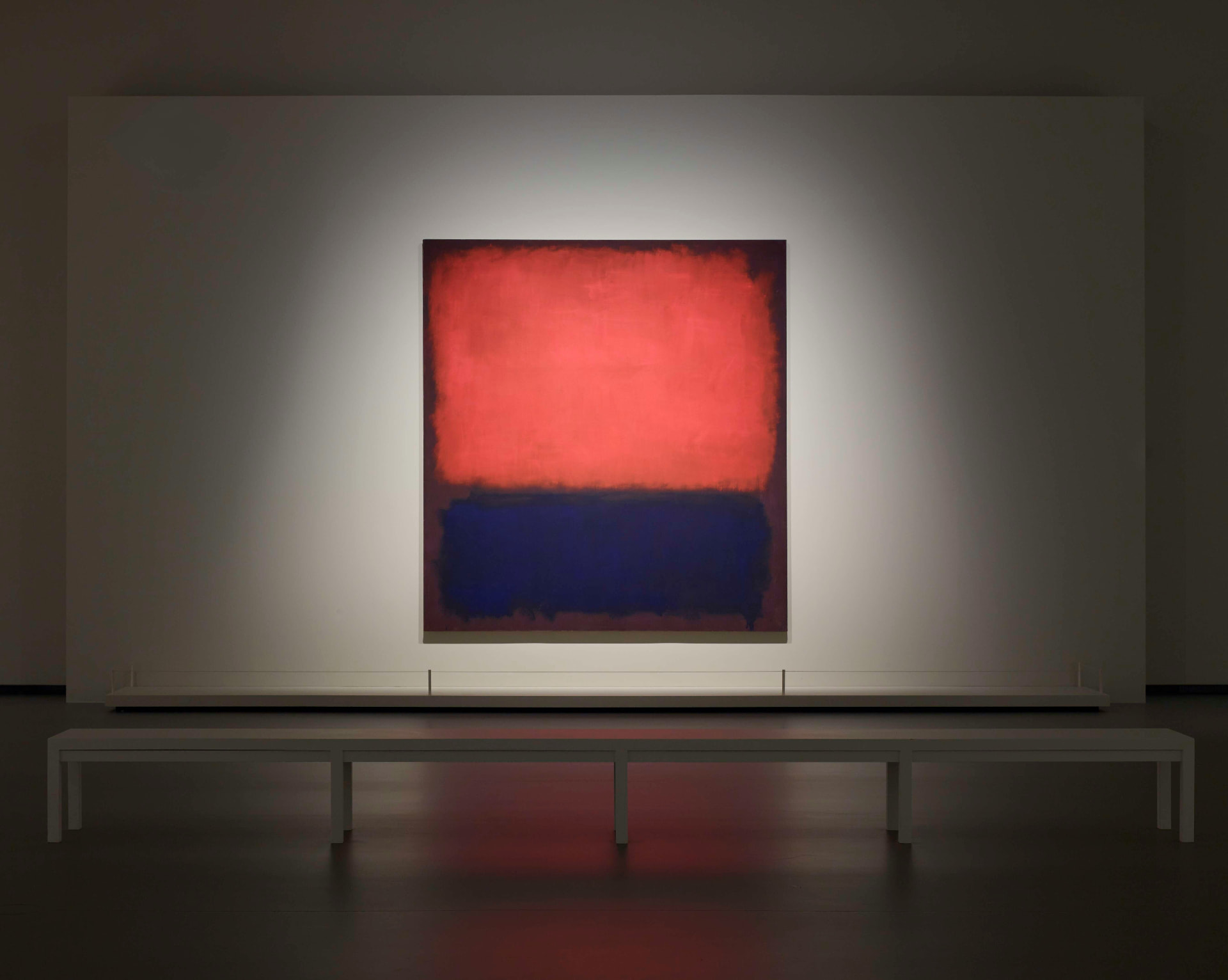
If one got a euro every time they heard “I could do that” while looking at a modern art piece, they could probably afford a Rothko at auction.
Mark Rothko was a Latvian-American painter who became one of the most recognizable figures in modern art. Born in what is now Latvia, he moved to the United States with his family as a child and later settled in New York, where his artistic career developed. His early paintings included people, interiors, and urban scenes, but over time his work became increasingly abstract.
By the late 1940s, Rothko had developed the style for which he is best known. His paintings usually consist of large, softly edged rectangles of color floating against a contrasting background. Rather than using detailed figures, he relied on color, scale, and composition to communicate emotion. Rothko was interested in expressing fundamental human feelings such as tragedy, ecstasy, and doom.
Although his paintings may appear simple at first glance, their surfaces are carefully constructed. Rothko applied thin layers of paint to create depth and subtle variations in color. The edges of his forms are often blurred, allowing one color to seem as though it is dissolving into another.
Rothko’s No. 15, painted in 1964, sold at Christie’s for $98.3 million on May 18, 2026. Long before his paintings commanded such enormous prices, however, he supported himself in part by teaching art to children. His experience as a teacher may have reinforced his interest in the direct and instinctive ways people respond to color and emotion rather than technical perfection.
This is where the familiar criticism of modern art, “I could do that,” begins to fall apart.
Yes, you could paint large rectangles of color onto a canvas. But copying the appearance of a Rothko is not the same as creating one. His work depends on subtle choices of color, proportion, layering, edges, and scale.
The simplicity is deliberate. Rothko spent decades developing a visual language capable of expressing emotion without figures, landscapes, or narrative.
So perhaps the question is not “Could I do that?”
You probably could.
The better question is whether you could have thought to do it first and made it mean something.
That is much harder.
Sources
Who is Mark Rothko? 9 Things to know, National Gallery of Art